
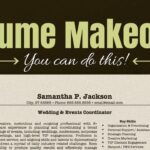

In the online era, resumes are still an art

Posted on 20. Nov, 2005 by Bill in Employment News

In the online era, resumes are still an art
In the game of getting a job, the hunt might begin something like this: Eager applicants reach for that sheet of 24-pound ivory-white resume paper and . .

“No one really wants your paper anymore,” said Mike Worthington, co-founder of Resume Doctor. “The way the ATM has changed banking, the Internet has changed the job search. Getting our resume out to someone is literally a mouse click away.”

With scores of employment opportunities found online, it’s easier than ever before to find and apply for work, but the Web-based hunt means job seekers of today must craft a diamond-sharp digital resume sure to survive the fast-paced filtering of information-slammed employers.

And employers are hungry for employees, according to a recent national survey of job prospects from the Collegiate Employment Research Institute at Michigan State University.

It states that hiring college graduates is expected to rise between 6 percent and 14 percent for 2005-06.

One of the first barriers a Web-submitted resume meets is a search engine that scours the document for words reflecting skills appropriate to the job, says Ted Bouras, director of the Career Services Office at the University of New Mexico Anderson Schools of Management.

“It is a really a helpful tool for them (employers) to narrow down candidates that are really qualified,” Bouras said. “I think it is forcing folks to write resumes that are much more relevant. . . . It gets rid of a lot of the fat and a lot of the fluff that typically shows up.”

Bouras encourages job seekers to skip the flowery verbs and focus on terms reflecting specific skills. Instead of writing “computer proficient,” for example, job seekers should list the software programs they know by name.

“It really tightens up the resume,” he said. “It’s a great change.”

Some things will probably never change.

“Networking is still the number one way people get their jobs these days,” Bouras says. “Their network is going to be one of their best resources, now and definitely in the future.”

Cole Knappen, a 24-year-old sales associate with Pulte Homes and a 2004 UNM graduate, credits his network of friends and associates with helping him land his first and second job out of school.

“I would really attribute that to the word of mouth from professors,” he said.

When the time came to give a resume, he handed over one on paper.

“Posting it on Monster.com . . . is really not as advantageous,” he said. “Showing up . . . in person is the strongest way to do so.”

But Ian Rives, a 24-year-old Albuquerque resident and senior recruiter with the Aerotek staffing agency, said posting his resume at www.monster.com - a Web site listing jobs around the world - produced “countless phone calls” from employers.

Yet it was a resume sent directly to a company via the Web that turned into a job. He applied to seven other companies the same way.

The two employers who received his paper resumes never got back to him, he said.

“Those tend to not be the best ones to go for,” he said. “It’s like the proverbial black hole.”

But whatever method a job seeker uses to land employment, it better be to the point.

In the past, a resume had a whole 30 seconds to make an impression on a hiring manager, said Marky Stein, a 17-year career coach at Parachute Inc., an outplacement firm in California.

“Now, HR people are telling me they look at a resume for about three seconds before they put in a paper shredder,” she said. “The time has gotten shorter and shorter and shorter.”

Without a quick summary at the top of the resume explaining specifically why you’re a good fit for a job, it’s likely a resume will be tossed, she said.

“People really do throw out resumes that are not specific,” she said. “It really is unfortunate that people with possibly much better qualifications will not get an interview because their information is presented poorly.”

THE RESUME THAT RINGS With the Web and other technology changing how people get and review information, the resume - what one veteran career coach calls a “marketing letter” - is undergoing changes of its own.

We consulted three experts: Mike Worthington, co-founder of Resume Doctor online; Marky Stein, career coach at Parachute Inc.; and Ted Bouras, director of the Career Services Office at the University of New Mexico Anderson Schools of Management.

Here’s their advice on how to make your resume stand out among hundreds that can crowd a hiring manager’s desk:

Be specific: Describe your experience and knowledge with precision. Instead of writing “skilled with computer software,” write, for example, “skilled with Microsoft Excel.” This can help get hits with search engines designed scour a resume for the words demonstrating experience relevant to a job.

Be targeted: Don’t go for jobs you clearly don’t qualify for, and when you do qualify, show exactly how.

Quantify: Describe your accomplishments with numbers. If you increased sales for a company, say by what percentage or amount.

Be brief: Your resume gets three seconds before a hiring manager tosses it or keeps it for further review, a veteran career coach says. Say who you are and why you qualify fast.

Think of the screen: Many resumes will be seen only in electronic format. That can sometimes mean only the top portion of it will be visible, so make sure the most relevant information about your qualifications get that top section.

If you're new here, you may want to subscribe to my RSS feed. Thanks for visiting!

Share/Save/Bookmark

Tags:

Leave a Reply

UA-206632