

What Every Executive Should Know About Writing a Powerful Resume

Posted on 08. Mar, 2009 posted by Bill in Employment News, Resumes

With all the discussion surrounding today’s job market, one key fact seems to be lost: there’s never been so many choices available to employers.

Many hiring authorities are literally under siege, and the speed of Internet-powered executive searches only adds to the situation.

What this means for executives is that a marketing focus is critical, and that, more than ever, converting your resume into a marketing brochure is an essential step.

To get into the marketing mindset and sharpen your promotional skills, start envisioning your resume as a marketing brochure, using these key attributes:

1) Technical writing.

Resumes are intended to provide analytical and precise detail about your background and achievements.

In fact, resume writing has a strong correlation to technical writing in that both professions demand extreme precision.

Most readers of your resume will assume that what you show on paper correlates strongly to what you can do for your next employer.

If your resume fails to show results (meaning key metrics and bottom-line, quantifiable information), the hiring audience will dismiss your resume since it lacks PROOF of your performance.

For this reason, it’s important to recognize the significance of what you’ve done at work. To get at the level of detail that will actually market your qualifications, use a blank piece of paper to create 2 columns on a single page.

In the first column, list all the major tasks and projects you’ve been involved with at work.

In the corresponding row, list the result that each project had on the company.

This can be efficiencies gained during a business process improvement effort, costs cut with the implementation of a new system, or new business gained by creating customer relationships.

Think in terms of dollars saved, numbers of people affected, or amount of business generated, and you’ll be on the right track.

Remember that the more analytical and precise these results are, the better. Whatever the result, it should first be noted on your list, then incorporated into your resume.

2) Business knowledge and subject matter expertise.

As many job hunters know, resumes are often scanned by automated systems for keyword information in order to reject or accept the document for a job opening. However, did you realize that the same keyword information also has an effect on the HUMAN reader?

Since hiring authorities are frequently on the lookout for core business competencies, including keywords on your resume gives you a means of showing proficiency in your field.

The best way to mine for this information is to study your own business and industry expertise, and pull in some key phrases that describe your knowledge.

In addition, these keywords can be gleaned from systems, methodologies, leadership styles, and other components of your everyday work.

You can also comb through job descriptions for your desired position to obtain more keywords for use on your resume.

After you’ve identified these skills, be sure to weave this information throughout your resume, keeping in mind that employers need to see HOW you’ve applied these competencies.

3) A true leadership presentation.

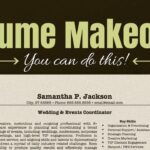
Style and formatting are often-overlooked components in the success of a resume, yet a striking and compelling presentation can win over the reader–and make your skills more marketable.

As an example, try opening Microsoft Word and selecting the basic resume template for review.

Then, as a comparison, look on the Internet for executive resume samples to see some core differences. You should see understated, elegant presentations that make the information seem more interesting to read, and bring out various words more than others.

Don’t discount the impact of this strategy, since it is often used to re-weight certain parts of your background-and position you squarely into a new role.

To add emphasis to your resume presentation, consider using format elements, such as italics, borders, bold text, and lines. This will help to set off certain phrases or skills.

In addition, continue to use the resume samples you’ve found to incorporate a new design element here and there.

Think of it as borrowing key ideas that can help you promote your skills.

In summary, thinking like a marketing and technical copywriter can be an effective strategy for creating your resume.

After all, it’s important to design a true marketing campaign that promotes your strengths–and gets employers to look deeper into the value you offer–in order to claim the attention your career deserves.

Laura Smith-Proulx, Certified Career Management Coach, Certified Professional Resume Writer, and Certified Interview Coach, is a former recruiter and the Executive Director of An Expert Resume, a career services firm that caters to organizational leaders. Published in 6 career bestsellers and cited for global resume industry awards, she wins interviews for executives at all levels with compelling and powerful leadership presentations.

Similar Posts:

Share and Enjoy:
  • Print
  • Digg
  • Sphinn
  • del.icio.us
  • Facebook
  • Google Bookmarks
  • email
  • FriendFeed
  • LinkedIn
  • Live
  • Posterous
  • Propeller
  • StumbleUpon
  • Twitter

Leave a Reply

CommentLuv Enabled
UA-206632-5