

Preparing Yourself For an Interview

Employment News No Comments »

Keep up to date on articles and news and subscribe to my RSS feed. Thanks for visiting!

During any interview, the aspects that are tested are knowledge, aptitude, confidence, interpersonal skills, ability, and a desire to work hard. As an adjunct to this, your physical appearance, and the effectiveness of your communication skills will also be assessed. Consequently, any preparation for the interview includes the practice and improvement of all of these factors.

The questions that interviewers generally ask are usually concerned with any recent developments and events that have occurred in that field. You can read the magazines and websites related to your field to familiarize yourself with these. Keep in touch with any friends who are involved in the same field and exchange information with them. Through this you can also gain useful information about any interviews that they may have undergone.

However, even before this point, any knowledge you possess regarding the subject of your training is very important. Therefore, even if you received very good marks, it is important you practice and revise this information before the interview.

When you answer one question in an interview it is possible that the interviewer may ask a cross-question based on your answer. You will then have to think very quickly and as such, good practice is required. You should practice self-interviews several days prior to the interview. At this time you can practice such question and answers. You may be able to find a guide or some book containing questions that are related to your field and this will be of great benefit for your preparation. Alternatively, these guides may also be available online.

You should practice until such times as you can fluently consecutively answer these questions. There should be no delays in answering. You may find it helpful to ask someone to ask the questions and then you can practice the answers. This would also be helpful for gaining confidence in answering the questions at the actual interview.

As knowledge is considered to be important for the interview, so too are your confidence and interpersonal skills. To build your confidence, you may wish to practice orally any questions and answers that may be asked at the interview. Practicing aloud will be of great assistance. It can also have the added benefit of improving your voice projection and allowing you to feel more comfortable when giving the answers in situations where you are speaking to one person or indeed a large group of people.

Excellent interpersonal skills are vital for working in any position. As such, you should ensure that you have the basic skills required for dealing with other people.

Most interviewers also are influenced by your physical appearance. It is also important that you are able to demonstrate a degree of patience and understanding in your behavior as many interviewers will be looking for such qualities in candidates. They will most likely choose someone who shows forbearance rather than anger when challenged.

Visit Job Interview find advice on every aspect of job interviews particularly the thank you letter job interview.

Article Source: http://EzineArticles.com/?expert=Ray_James

After One Career, Boomers Look to Return for an Encore

Employment News No Comments »

For the World War II generation, retirement was the happy end of a long working life.

For baby boomers, who have redefined most everything else in their lives, retirement may just be a transition to an all-new encore career or “a new stage of work after a midlife career,” says Phyllis Segal, vice president of Civic Ventures, a nonprofit focused on redefining the second half of life.

“It combines compensation, personal meaning and social impact. Encore careers are unique because of their social aspects,” she says.

Between 5.3 million and 8.4 million people ages 44 to 70 already are involved in encore careers, according to a new survey by Civic Ventures and the MetLife Foundation, a philanthropic arm of the insurance giant. A total of 3,585 people were interviewed from February 23 to April 1 by research firm Peter D. Hart Research Associates. According to the survey, most of those already in encore careers work in education, health care, government, nonprofit organizations and for-profits that serve the public good.

Half of those in the survey who don’t have encore careers would like to pursue them. Yet they face a number of obstacles.

“The older workers and retirees I study would like to do something meaningful or just make connections with people,” says Phyllis Moen, the Endowed McKnight Presidential Chair in sociology at the University of Minnesota. “They can’t find flexible jobs, though, and they don’t want to work full time anymore. They don’t see the kinds of situations they want.”

Moen says retirees with nondisabling but chronic health problems want to work as much as those who are in good health. They also need flexibility so they can manage their health concerns, but can’t find it.

Most people already in encore careers, however, report sufficient flexibility, even among the 59 percent of survey respondents working 40-plus hours a week. Of those, 73 percent have the flexibility they desire, and 85 percent have enough time outside of work to pursue their interests.

“Flexibility is not just about the number of hours you work but about having control over your time,” Segal says. “The type of work you do and the organization you work in can increase that control, even if you’re working full time.”

Laws that constrain post-retirement employment and corporate policies mandating traditional work schedules also pose obstacles to encore careers, but Segal thinks the necessary changes can be made.

“In the early 1900s, adolescence was identified as a new stage of life, and a whole group of programs were created for that,” she says. For encore careers, “We need to help social sector employers, nonprofits, government and others become aware, create pathways and training programs for individuals and help individuals find ways to hook up with employers.”

Such pathways are being built. The federal Partnership for Public Service, aimed at bringing talent into government, makes a point of recruiting 50-year-old-plus workers. Several states, including Arizona, Maryland and California, are setting up offices and task forces to recruit older adults to fill vacant jobs and help their communities.

Two bills have been proposed that could help. The Incentives for Older Workers Act, introduced by Sens. Herb Kohl, D-Wisconsin, Gordon Smith, R-Oregon, and Kent Conrad, D-North Dakota, would remove barriers to phased retirement and help people return to work after their midlife careers have ended. For those who postpone receiving Social Security, the act would extend the retirement-delay credit from age 70 to 72.

New lifelong learning accounts, proposed by Reps. Rahm Emanuel, D-Illinois, and Jim Ramstad, R-Minnesota, would let people save up to $2,500 per year pretax for education and training at any point in their lives.

Florida resident Gordon Johnson’s path after retiring from a lifetime of working with foster children in state and corporate systems illustrates one encore career. Throughout his working life, Johnson fought against the common state agency practice of splitting up siblings to make it easier to find foster homes for them.

In 2000, at the age of 67, Johnson founded Neighbor to Family, a certified, private, nonprofit organization in Daytona Beach, Florida. Neighbor to Family not only aims to keep foster siblings together, but also works with the children’s families to solve the fundamental issues that force children into outside custody. The organization has been so successful that Johnson was asked to set up similar programs in seven other states.

“When you’re on a mission, and you find something that’s working, and you develop it, you have a different kind of energy. It’s a passion,” he says.

Nonprofits, government at all levels and for-profit businesses should be actively recruiting encore career seekers like Johnson, experts say.

“Not many people today can sustain themselves on retirement income and Social Security,” Segal says. “Employers need good, experienced, passionate candidates. People in encore careers are a potential talent pool with ability, commitment and a passion to do the work. They can help make the world a better place.”

Are You Prepared For Your Job Interview?

Employment News No Comments »

There is no disputing the fact that the job interview is the most important step in winning a job. That is not to say you shouldn’t concentrate and work on your resume and other aspects of the job game, because a good resume will get you noticed, but it is your behavior during an interview that will get you the job.

Being prepared, by researching the company to rehearsing your answers, is essential in presenting yourself well in a job interview. Whether this is your first job search or whether you are a seasoned professional, job interviews can be a nerve-wracking experience. Although, you may be qualified for the job, not being prepared can lose your chance at employment. It is important to know the rules of the job interview regarding what to wear, what to say, and what to do when the interview is over. There are various strategies within these rules that you can use to your advantage. Remember, in the end there is usually only one winner.

Figuring out what type of work you actually want to do is probably the most difficult part of finding employment. You should not limit your options to a particular field or industry. It is not uncommon for a person to have four or five careers during their lifetime. As the saying goes, you learn something new about yourself every day. Your likes and dislikes, strengths and weaknesses. These can be priceless bits of information when you apply these learning experiences to choices you make as far as your career is concerned.

There are two very important questions to consider when choosing or changing careers. First, are you really prepared to take on the day-to-day duties that a job position would entail, just because a particular industry or job title seemed glamorous or enticing? Ask yourself whether it is just a job title you think would impress your friends, or whether you are actually ready and willing to meet the demands of this job. Second, what about your lifestyle and the demands of the job? For example, while the idea of becoming a talent agent or the assistant to some famous person sounds like a dream job, are you willing to be on call 24 hours a day? Are you willing to deal with degrading remarks or the sometimes “difficult” personality? A strict “very-little-free-time” price tag often comes with many high-paying and/or high-profile jobs. Before applying for these positions try to speak to someone in this particular field or a career counselor so you can learn more about it. Carefully read the job description and make sure you are ready, willing and able to provide the services that will be asked of you. You never know, the ideal job you dreamed about could turn out to be a nightmare. That is why it is very important you research the job, its duties and the company before accepting a position.

Okay, so you’ve determined that being at someone’s beck and call 24 hours a day doesn’t coincide with your plans. What to do next. Sit down with a pen and a piece of paper and make a list. Make two columns. Mark one column “likes” and the other “dislikes”. Think about the tasks that you liked performing as well as those you didn’t like performing, and write them down in the appropriate column. While on your job search journey, this list will serve as a reference guide. Whenever you come across a job that sounds interesting or if you are being considered for a particular position, you can check the list and see if the job duties coincide with your likes and dislikes.

Oftentimes, in the job search game, your mind can get clouded, so don’t be influenced by someone telling you that you would be perfect for that job position. Remember, thinking you might be great at a particular position doesn’t necessarily make it so. For example, you may love to talk and people may come to you for advice for their problems, but that wouldn’t necessarily make you a great psychiatrist.

There are plenty of career planning professionals that can be an asset when job searching, so don’t be afraid to seek their help and advice. Remember, being prepared will greatly better the odds of your being hired for the job.

Lamar Deane explores jobs and careers That Matches Your Skills

Job Interview Questions - What Was the Worst Part About Your Last Job and Why Are You Leaving There?

Employment News No Comments »

Job interview questions are notoriously deceptive in most cases. What you may think to be an innocent question that is probing for some deeper insight into your career could actually be a hidden trap for testing your nerve.

The question “What was the worst part about your last job and why are you leaving there?” is indeed one of these trapping trick questions .

The real reason you’re asked this is to see how well you hold your calm…how well you speak of others behind their back and how professional you appear in your overall attitude towards such negative aspects of your work.

But don’t worry, because there are a few ways to get around this tricky question…

Here are some examples:

“I hated having to fire people. I knew it was an important part of business growth, but hated the feeling of doing it”

“Having to maintain discipline, sometimes quite firmly to maintain a smooth running and professional work environment. I like to see people enjoy their work environment, but I appreciate there is a balance that needs to be maintained”

“My current job is great, but I do find the long commute difficult in terms of cost and in terms of draining my energy which could be better applied for the day at work ahead”

Not only do these examples avoid making you look aggressive, negative or unmotivated…but also put a positive spin on a negative aspect that you were unhappy with.

This will also reassure your potential future employer that you aren’t going to bad mouth them, or see potentially negative aspects of a new job as a trigger for wanting to leave.

Would you like to ace your next job interview? Can you afford to let the next job interview slip through your fingers? If not, then why not take advantage of the free job interview guide at http://job-interview-questions-guide.com and make your future employers fall in love with you through a well presented interview that lands you the job

Finding job satisfaction

Employment News No Comments »

I think it’s pretty safe to say that in the fight against adulthood I’m not winning. What would be even truer to say is that it’s becoming ever more of a willing surrender. You see, I finally seem to have found a career that suits me: I’ve become a freelance copywriter.

This does seem to mostly entail writing about dull business software that I don’t really understand - so dull that I can often sense my brain obstinately crossing its arms and sitting in mute defiance until I relent and do something - anything - else for a bit. But that’s the brilliant thing: I can do something else for a bit, something that isn’t even work. I’m freelance. I work from home. I’m my own boss.

This was what I always assumed adulthood would be like.

I soon learnt otherwise - like most people, I suppose.

Let’s leave university aside - if taking a philosophy degree isn’t a way of avoiding the real world for a few years then I don’t know what is. For me, adulthood began when I entered the world of work full time. Thanks to that philosophy degree, this seemed to mean temp jobs [LINK] in offices. If this was adulthood, I decided, it had been sorely overhyped. It was also something to be resisted.

Don’t get me wrong, I still tried to make the best of a succession of awful jobs, since I didn’t really see what other choice I had (anything I appeared qualified for appeared to be as bad as every other thing I appeared qualified for). This inevitably proved to be a mistake. It got me sacked. Twice. Well, I say mistake: in truth, failing to remain in the complaints department of a rail franchise that runs not only the Stansted Express but also most of the main London commuter lines should never be considered a mistake, even if it wasn’t wholly intentional. Few jobs in existence are closer to the eternal uphill boulder-rolling punishment Sisyphus was condemned to in Greek myth than that one.

No, the only aspect of leaving a job - whether willingly or, when I was sacked, only very slightly less willingly - that I ever found regrettable was that it meant searching for more jobs. Yet more pretending to want something you didn’t really want. Yet more trying to appear more qualified to tap things into databases, adjust standard letters, or listen to people complain, than anyone else might be. Yet more forms.

In the end I decided it was less hassle to just not get sacked, or not leave. I even stuck to a job - or got stuck in it - for a few years. I thought I’d finally succumbed to adulthood. God, it was depressing.

But I was wrong. There was another way and I cannot believe that I missed it. I spent some time getting a new qualification!

Getting myself qualified in what I really loved doing was great. The business stuff pays enough that it only takes up part of my writing time. Taking control, finding a life and a lifestyle that suited me couldn’t be better. Now I truly feel like an adult. You can do the same because it’s so easy and when it happens you’ll know, believe me - it’s really not that bad.

Resume Builders and Other Writing Software

Employment News No Comments »

Writing a resume can be a tedious task. There’s so much information to include and organize (employment history, skills, education, career highlights, awards, etc.) that the process can easily overwhelm you if you let it.

Luckily, there are now tons of resources available that make resume writing much easier. In particular, online resume builders and downloadable writing software can do more than samples and templates ever could in guiding you through the writing process. So if you’re looking for assistance in writing a resume, you may want to look into using an online or downloadable resume builder.

What is an Online Resume Builder?

An online resume builder is a tool that offers user-friendly, step-by-step guidance for writing resumes. Usually providing assistance through a wizard, you are asked questions about your career and background to help you create a resume specific to your field. The reason resume builders are so popular is that many help you sort out problems like determining whether to choose between a chronological, functional or hybrid style. Also, most offer spell check tools and other writing tips to help keep you on track.

Most effective online resume builders come with a price tag attached; you usually can expect to pay a one-time fee of anywhere from $10 to $15 to create one resume. And if you want to go back to edit existing resumes or create more, you may have to pay a monthly fee - but for that monthly fee you are likely to get extras like the ability to apply for existing jobs, post your resumes online, and even create cover letters and follow-up letters.

Resume Writing Software Packages

In addition to using online resume building services, you can download software packages that work similarly to help you write and edit your resume. Many of them, once downloaded, offer the same types of job-searching tools and help with resume distribution that the online resume builders offer.

In fact, there doesn’t seem to be a huge difference between the resume software package and the online resume builder except that one you download to your hard drive and the other you have to visit the website to work from. And most fall into the $20 to $50 price range, which is not bad for the service you’re receiving.

Don’t Forget the Essentials

While the resume builders are great at helping you organize and write clean, error-free resumes, you still want to remember resume-writing essentials like conducting research on the company, and using action words instead of duty-oriented phrases during the writing process. Though the resume building website or software can give you writing tips, it cannot do the extra work for you that will heighten your chances of getting called in for an interview, so keep this in mind throughout the writing process.

Using a resume builder or downloadable writing program is a quick and easy way to create a professional resume. So the next time you need to write yours - and you’re short on time and money - you might want to try one out. The added expertise and guidance may be just what you need to increase your chances of landing your next great job.

Heather Eagar is a former professional resume writer and is passionate about providing working professionals with current, reliable and effective job search tools and information. If you’re in need of a resume builder or other career and employment software, go to http://www.resumelines.com/career-resources/resume-ebooks.html

How To Email Your Resume To Potential Employers

Employment News No Comments »

In order to seek out and apply for the jobs you are interested in, you will most likely post your profile and resume on a job search web site, such as monster,career or hotjobs. These search engines allow you to upload your resume in a Microsoft Word or text file format, or create one using their forms.

Outside of the job search web sites, e-mailing your resume as form of application has become commonplace. However, each employer or headhunter has different rules on the file they will accept via e-mail. Most companies will accept an attachment in Microsoft Word this is why you have to be conscious of the font type and size, as well as margins you are using when composing your resume. If a company is requesting a text file, you should follow these steps to convert your Microsoft Word document into a text resume:

-Select File, Save As
-Name the file; as a best practice, use your name as the file name, and use underscores as spaces
-Under Format, select Text Only
-Select Save.

Now that you have converted your file to a text file, make sure to open it and review how the spaces, tabs, and bullet points have transferred over. You may need to do some edits in order to format the resume to fit the file type. Note that the plain text file doesn’t allow for bolding, italicizing or underlining. Make sure that all your text is left justified and that the spacing is correct.

If an employer asks that you include your resume in the body of an email, treat this as a text file when formatting. Copy and paste your whole resume in an email. Keep the font styles basic; use Arial or Times New Roman fonts and keep the size at 10 or 12 points.

Adjust all the spacing and bullet points as appropriate. A good rule to follow is to keep the email simple is to avoid bolding or italicizing text since you don’t really know the type of email software your recipient is using or if the accept HTML or text emails only.

If you are sending your resume as an attachment, format the body of your email as a cover letter. At the top of the email, include your name and address, as well as the address of your recipient. Typically, the address can be found either on the job listing or at the company ’s web site. If you are sending the resume in the body of the email, follow the same guidelines in terms of the email content.

Don’t make an assumption that including a resume in the body of an email is the only information you should include in your message to your potential employer.Even if the resume is copied into the email, you still need to let your employer know a little bit more about yourself via a cover letter. However, since you will include your address at the top of the email, feel free to start your resume with a career objective instead of including the heading with your name and address.

Much like proofing is critical in perfecting your resume, testing how your resume is displayed in a body of an email or how it opens as an attachment via another computer is important.

Rally your friends or family for help, and send them sample emails with your resume included in the body of the message or as an attachment. This will provide a great opportunity for you to assure that your resume is reaching your potential employers in the format that is clean and professional.

Don’t Take Interviews For Granted

Employment News No Comments »

I recently had a discussion with a candidate that went for a interview at a well known insurance company. The initial contact was made through a friend of a friend who worked within the company. A week after the candidate had sent their CV in for review their mobile phone rang with an offer of an interview the following day. Excitedly the candidate said yes immediately, as soon as the phone conversation ended they jumped on the internet and started to research the company, when it was formed any recent news stories and financial reports. With so much info to sift through it was difficult to know what key points to remember just in case they where touched upon during the interview.

The next day the interview flew by, the candidate was confident that they had done enough to at least be seen again. They had also been informed should they be requested to return for a second interview the guy who would be conducting the interview was company man who’s life was dedicated to work. As such it would be a good idea to know as much about the company, in particular its CEO and its core principles. So the candidate went away and researched all these subjects further. Creating ways to remember the details should the need arise.

Soon enough as expected the phone once again range with some good news. The all important second interview. All that needed to be done now was to come back to each question with a positive answer and the job would be in the bag.

This is where candidates need to expect the unexpected. The second interview went fine. In fact it went so well the candidate was asked back for a third interview. They had been advised by other sources that as this was with HR the representative would only be asking the sort of question that would uncover what the candidate was like as a person. What made them tick. This is exactly how the interview went until the candidate mention they had done a lot of research on the company. At this point things started to go very bad. The candidate had spent the last week neglecting what the company actually did. They had been advised by other sources that these questions had been covered in the first two interviews and to now concentrate on question related to the person. Big mistake.

Luckily this article has a happy ending. The candidate went blank. Froze and couldn’t speak for a few seconds as their brain tried to search for the information that they had spent so long trying to remember. But nothing much come out. What little did come out was enough to secure the job offer. Although after this interview the candidate was convinced that they had blown it.

The moral of this story is to make sure you go into every interview armed with as much information as possible. Just because a question has been asked by one person it does not mean that it wont be asked again.

Good luck.

Reblog this post [with Zemanta]

Unwritten Rules to Follow on the Job

Employment News No Comments »

A job is more than just something that brings you money and helps pay your bills. It is also your livelihood and an item that gives you satisfaction, pride and purpose. It hurts your dignity to lose your job. You are about to learn many things to avoid doing in order to keep your job.

Do not work a very light schedule, especially if you are a new hire. When I began my first job in July 1991 at a fast-food restaurant in high school, I worked a few days a week before the new school year started. After school started, I only worked on Saturdays. This greatly hurt me because I did not work enough to master cooking, working the drive-thru window, operating a cash register, etc. As a result of my incompetence, I missed out on learning skills, I spent almost all the time sweeping and mopping and I started being scheduled to work on a rare basis.

Do not display a bad attitude or frown. Once while working at the restaurant, I heard a manager say, “We fire people mostly because they have a bad attitude.” While mopping the lobby on the last day I worked there, the boss told me, “If you don’t work a little faster, I don’t think I’m going to have you working for me anymore. I’m watching you today, Todd.” I frowned and continued mopping but never saw my name on the schedule again even though I started working faster. My Sunday school teacher told me my frown probably cost me the job.

Never use dirty mop water. Sometime after I lost the burger job, a schoolmate told me the boss just fired him because he mopped with dirty water. While I walked by as a patron at a different place a few years ago, a supervisor scolded a worker, “Why are you using dirty mop water? Clock out.”

Do not be so quick to call the police if you see someone doing something you think is illegal. When I saw a fellow worker making a copy of a film while I worked as an audiovisual assistant, I left the room and called the campus police. A few days later, my fellow worker came into the room and said, “Why did you call the police? It’s only illegal to reproduce films if you distribute them. That really (beeps) me off. If I was a mean MF, I would beat you into the ground.” The supervisor warned me to discuss such matters of concern with him in the future.

Do not walk far to work in hot weather. If you do, you will get sweaty and funky. Fellow workers will not want to be around you and management will let you go without telling you the true reason.

Do not run away from a challenge. At one point while doing window demonstrations, I started clocking out early because I had trouble writing leads and I did not want to look bad by working several hours and not acquiring signups. One night when I called my supervisor to ask where I would work the next day, he said, “You s–ked the other day big time and clocked out early again. Don’t do it anymore. That’s the bottom line. I’m tired of it.”

Do not overreact to evil customers. A customer once gave me a snide remark as I greeted him to give him a window demonstration. I retorted, “You didn’t have to be rude.” My immediate supervisor told me, “If Michael (his boss) had been standing here, he would have fired you and asked you for your badge. You should have let that guy walk out the door feeling like he was the jerk.”

Do not lie down on the lobby sofa. After I lied down on a lobby sofa off the clock while working as a market research telephone interviewer in a building with several offices, my supervisors got a call and I was reprimanded.

Do not sound weird or unprofessional on the telephone. I was once reprimanded for talking to a respondent with a funny pitch while I was excited.

Do not fall asleep at your station. This could lead to a warning or firing.

Never oversleep. If you must take a nap elsewhere while on your break, do not put your head down. If you put your head down, you are likely to literally fall asleep and not make it back to your station on time.

Follow these rules and do anything else that applies good common sense to keep your job!

Todd Hicks owns Skill Development Institute, an enterprise that provides a keyboard typing lesson and academic study guide. To become a great typist or student, visit Skill Development Institute. http://www.ktaassde.com

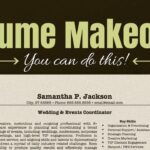
How To Make Your Resume Stand Out

Employment News No Comments »

How To Make Your Resume Stand Out by Christine Hassler, Huffington Post

There’s nothing more disheartening than feeling like a tiny fish in a sea of hundreds of applicants. Sometimes it’s just the luck of the draw and knowing the right people that lands a job; however, there are several things you can do to make yourself more visible and a stronger candidate to a hiring manager that go beyond chance and connections.

My first tip is perhaps the most obvious, but the most necessary. Make sure your resume and cover letter are tailored to each job and are 100% error free, clearly organized and look extremely professional. You would be amazed at the number of applicants who neglect this vital step and whose resumes get discarded first. Consider even downloading a unique, yet professional font so your resume stands out.

While you are proofreading and drafting your application materials, really showcase your experience in short, powerful statements that pop off your resume like “increased sales by 75%” or “promoted to senior position in less than 6 months” or “supervised over 20 employees.” And make sure your resume has words and NUMBERS - people like tangible things. These small changes make your resume easier to read and thus more enticing to future employers.

Another important step is to become more than a name on a piece of paper. Do whatever you can to find some kind of “human” connection at a company; don’t just rely on submitting your resume on-line. Remember the six degrees of separation rule. I have a client who when she is applying for a job, sends an email out to her contact list asking if anyone has a connection at the place she is applying. This extra step will take you no time at all, and you would be surprised at how wonderful the “friends of friends” network can be. And even if you can’t find a connection, try to find a number for the HR department and call to speak with the hiring manager in charge of your desired position.

And finally, in addition to your resume, create a web presence. Consider keeping a blog which showcases your abilities and expertise in a certain area. For example, if you are applying for marketing jobs, blog about current marketing trends you are seeing. Be “Google-able” and include your blog page on your resume. This shows hiring managers that you are really passionate about your future career.

Now for a different voice than my own, listen to the expert advice of Misti Burmeister, author of From Boomers to Bloggers: Success Strategies Across Generations, and CEO and Founder of Inspirion Inc., a company formed to create partnership in the world through increased communication between generations. “First, recognize that over 90% of jobs are filled by referral. The vast majority of job seekers are searching through the same medium you are, so you have to be different to get noticed. There are three ways to do this: 1. Do your research about the company you are applying to and the individual you are interviewing with, 2. Tailor your cover letter and resume to each job, 3. Professionalize your social media while searching for a job (employers DO look at them!).”

You really only get one chance to make a first impression, and your cover letter and resume are your calling card so do some legwork and make them great. The more proactive and focused energy you invest in the way you go about your job search and present yourself, the more likely you are to stand out.

WP Theme & Icons by N.Design Studio
Entries RSS Comments RSS Log in